Growth Hacking
Creating Content for AI Search Instead of Traditional Keywords

, Community Leader
5 minutes

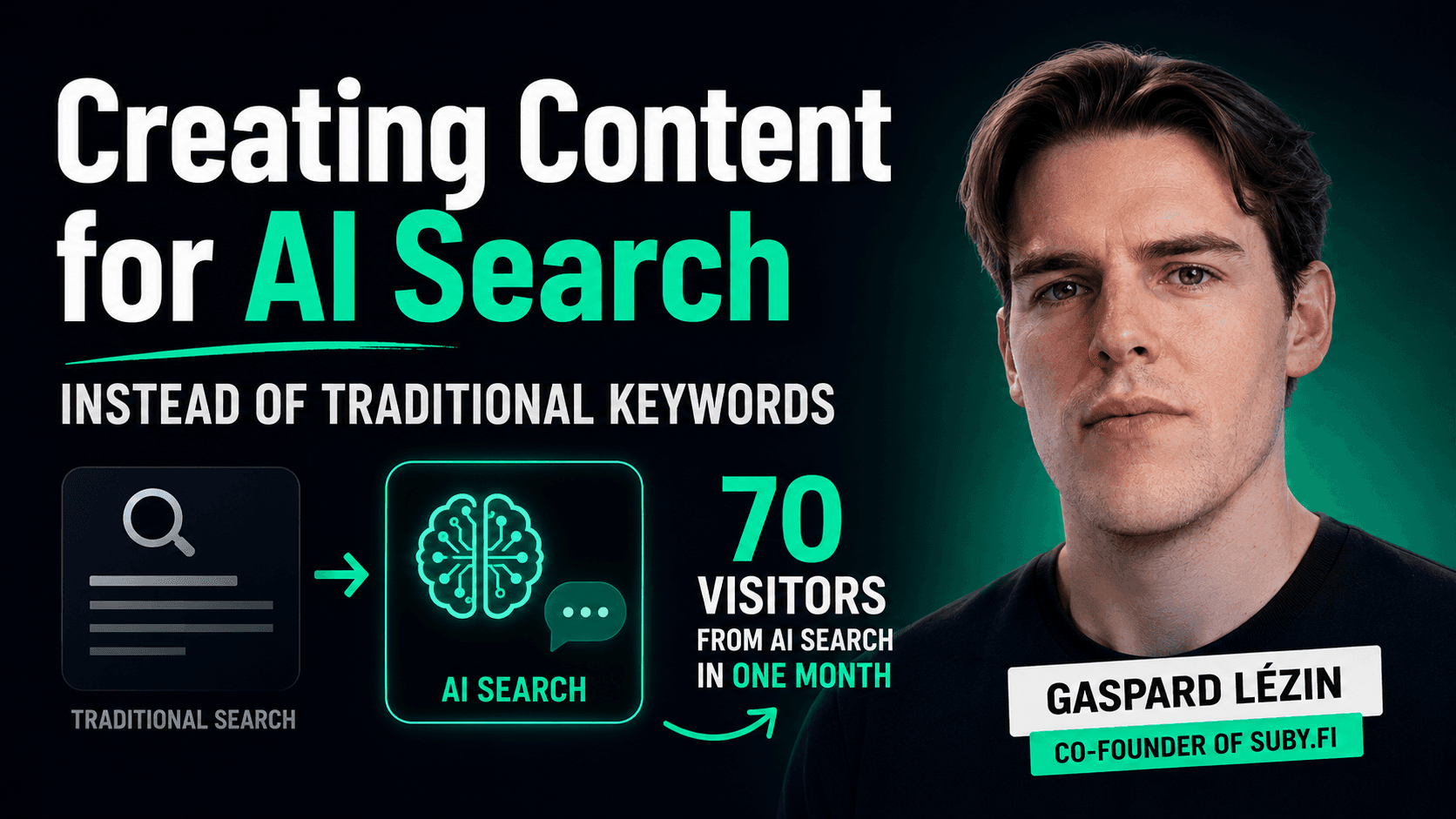
Optimize content for AI search engines like ChatGPT. Learn content strategies for AI-driven discovery, getting cited by AI, vs. traditional search.
How Gaspard Lézin, Co-Founder of Suby.fi, Attributed 70 Monthly Visitors to AI Search
Most content strategies begin with keyword research.
Founders identify the terms potential customers are searching for, create content around those keywords, and hope search engines connect the right pages with the right audience.
During a mastermind discussion, Gaspard Lézin, co-founder of Suby.fi, described a different approach. According to data he reviewed, 70 people discovered Suby.fi through AI search in a single month. Rather than focusing on the traffic itself, he became interested in understanding how AI systems decide which products and content to recommend.
His answer was simple: stop looking only at what users type and start looking at what AI models search for internally.
Why AI Search Requires a Different Content Strategy
Traditional SEO and search engine optimization were built around helping a search engine understand which pages are relevant for a specific keyword.
Modern AI search engines work differently. Platforms like ChatGPT Search, Perplexity, Google AI Overviews, and other AI tools generate conversational answers by synthesizing information from multiple sources rather than simply returning a list of links.
As a result, content for AI search requires a different mindset than traditional search.
Many SEO strategies focus on search volume and keyword rankings. AI platforms often prioritize whether AI models can understand, summarize, and reference the information within a page.
This shift has contributed to the rise of Generative Engine Optimization (GEO), which focuses on helping content appear in AI answers, AI summaries, and AI-driven search experiences.
For founders and marketers, the challenge is no longer limited to ranking in traditional search engines like Google. Increasingly, the goal is to optimize content for AI search and improve the likelihood of being cited by AI systems.
Tracking How AI Finds Your Product
Gaspard uses a GEO tool called Era (era.shopping).
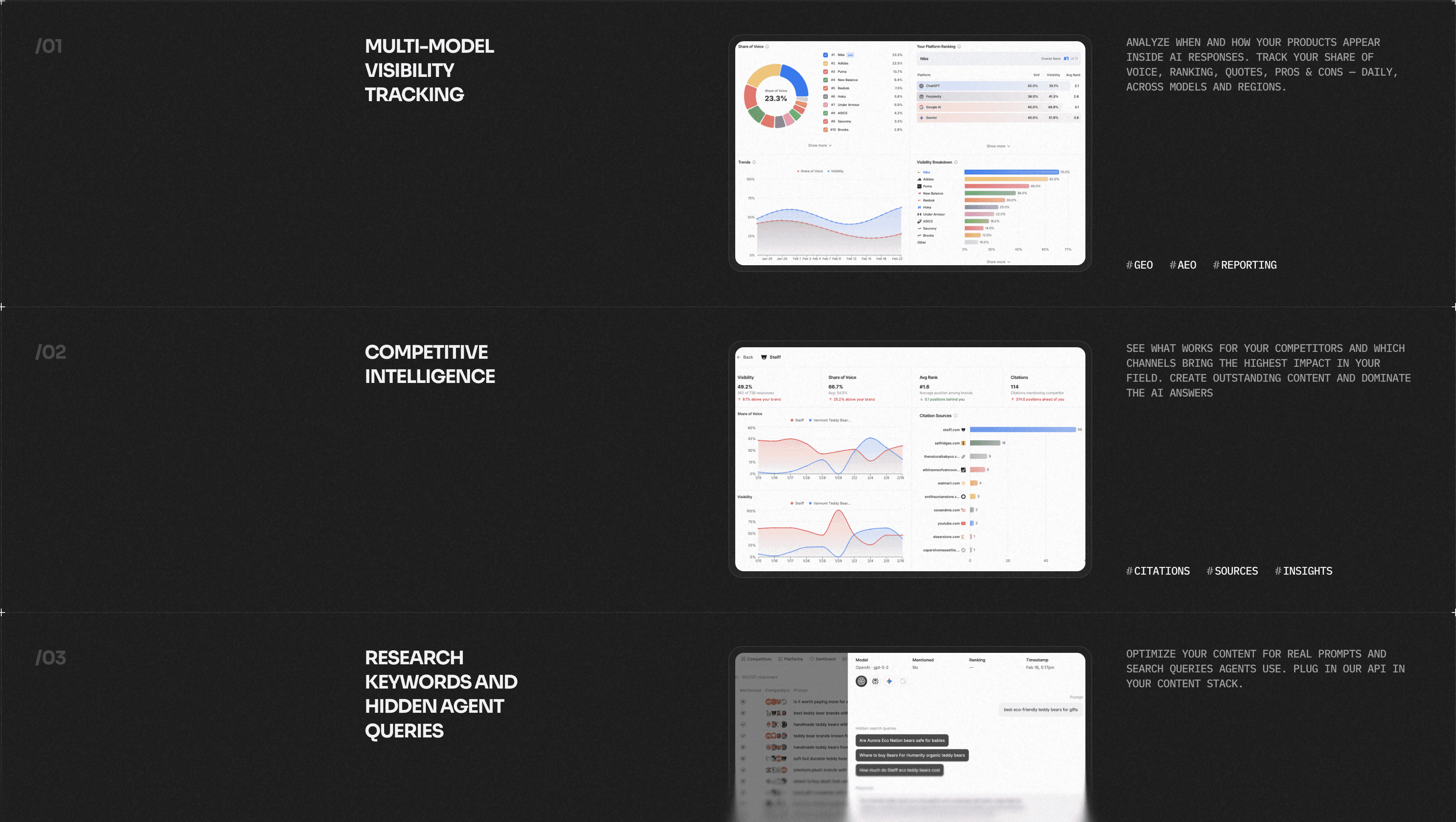
One of its features is designed to reveal the hidden prompts and search instructions AI models generate while answering user questions.
According to Gaspard, the platform analyzes hundreds of queries within a specific niche every day and shows the additional searches AI engines use to find relevant information.
Instead of seeing only the original user request, you can see the topics and criteria the model appears to investigate before producing an answer.
The Hidden Queries Behind an AI Recommendation
Gaspard shared an example involving payment platforms.
A user may ask an AI search engine for recommendations, but the model does not necessarily search only for the words used in the prompt. It may internally expand the query and evaluate additional criteria.
Some of the examples he mentioned included:
Reliability
Customer support
Product ratings
These become part of the model's search process.
According to Gaspard, the tool exposes those hidden queries, making it possible to see what the AI is actually looking for when deciding which products, articles, or websites deserve a mention.
How AI Models Evaluate Content
According to Gaspard's observation, AI models may generate additional searches before producing a recommendation.
When someone asks an AI engine about payment platforms, the model may investigate concepts related to reliability, support quality, ratings, and user experience.
This differs from traditional search engines like Google, where search results are typically organized around matching a keyword with relevant pages.
AI search engines attempt to synthesize information and generate concise answers. Because of that, content structure, semantic coverage, structured data, and clear explanations may make it easier for AI systems to parse information and understand the context of your content.
The result is that AI content visibility may depend on more than rankings alone. It may also depend on whether AI models understand a page well enough to reference it when generating conversational responses.
Creating Content Around AI Evaluation Criteria
This changes how content opportunities are discovered.
Most companies create content around obvious industry keywords. If they sell a payment platform, they write about payment platforms.
The approach Gaspard described starts from a different question:
What information is the AI model trying to find before making a recommendation?
If reliability repeatedly appears in AI-generated queries, that may justify dedicated content about reliability. If support quality appears frequently, that may become another topic worth covering.
Rather than optimizing for a single keyword, the goal is to address the factors AI systems use when evaluating products.
For founders creating content for AI search engines, these hidden queries can become a source of new content strategies and topic ideas that may never appear in traditional keyword research tools.
Conclusion
The most interesting part of Gaspard Lézin's observation was not that Suby.fi received 70 visitors from AI search in a month.
It was the research process behind that result.
By examining the hidden queries AI systems generate while evaluating products, he uncovered a different way to think about content creation. Rather than focusing exclusively on the words customers type into a search engine, the approach focuses on the questions AI models ask while deciding what to recommend.
As modern AI search continues to evolve, founders may need to think beyond traditional SEO. Understanding the evaluation criteria behind AI answers could become just as important as understanding the original search query itself.