LinkedIn cold outreach strategy: A practical guide

, Community Leader
12 minutes

Every day, thousands of professionals use LinkedIn to connect with potential customers, partners, investors, and future hires. Yet most LinkedIn outreach efforts end the same way. The connection request is accepted, the first message is ignored, and the conversation never begins.
The issue usually is not the message itself. It is the strategy behind it. Many people spend hours rewriting templates while overlooking far more important factors such as who they contact, whether their LinkedIn profile inspires trust, and whether they have a genuine reason to start the conversation.
A successful LinkedIn cold outreach strategy treats outreach as relationship building rather than a numbers game. Instead of trying to maximize the number of messages sent, it focuses on reaching the right prospects with the right context at the right time. That approach consistently leads to higher connection acceptance rates, better reply rates, and more valuable business relationships.
In this guide, you'll learn how to build a repeatable outreach system, identify your ideal prospects, personalize your messages efficiently, and measure the metrics that actually matter.
Why most LinkedIn cold outreach doesn't work
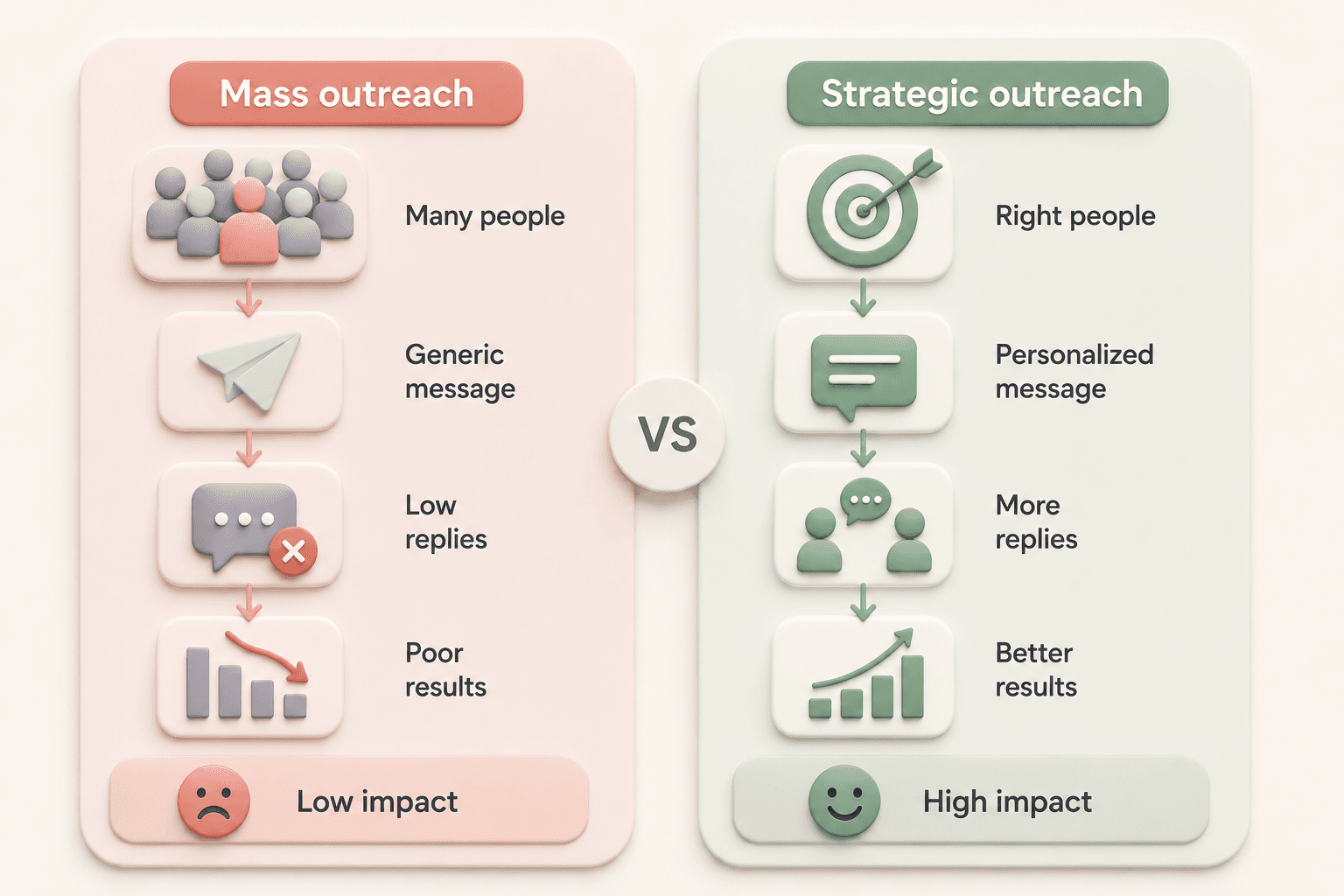
If you ask ten people why their cold outreach isn't producing results, you'll probably hear ten different answers. Some blame the LinkedIn algorithm. Others believe people have simply become tired of receiving outreach messages.
In reality, the problem is usually much simpler. Most outreach campaigns fail long before the first message is sent.
The first issue is poor targeting. Many people build prospect lists based only on job titles. They send messages to every founder, marketer, or sales leader they can find without asking whether those people actually fit their Ideal Customer Profile (ICP). Even an excellent message struggles when it reaches someone who has little reason to care.
The second issue is weak personalization. Decision makers receive countless messages every week, and generic outreach stands out for the wrong reasons. A personalized message does not require several paragraphs of research. Sometimes mentioning a recent post, product launch, or shared interest is enough to show that you are starting a genuine conversation instead of running an automated campaign.
The third issue is trying to close a deal before earning trust. Asking someone to book a meeting or watch a product demo in your first interaction assumes they already see value in speaking with you. Most do not. People are far more willing to continue a conversation when the first message demonstrates curiosity instead of immediately asking for a commitment.
The difference between ineffective and effective outreach is often surprisingly small.
Instead of... | Try... |
|---|---|
Targeting everyone with the same job title | Defining a clear Ideal Customer Profile |
Sending the same template to every prospect | Personalizing each conversation with relevant context |
Pitching your product immediately | Building trust before introducing your offer |
Measuring how many messages you send | Measuring reply quality and business outcomes |
Successful LinkedIn prospecting is not about contacting more people. It is about contacting the right people with enough relevance that continuing the conversation feels worthwhile.
What makes a successful LinkedIn cold outreach strategy
The strongest outreach strategies are built as systems rather than isolated tactics. Every step influences the next one. Better targeting improves personalization. Better personalization increases reply rates. More conversations create more opportunities to generate customers, partnerships, or referrals.
Most successful outreach systems include the same core elements.
A clearly defined target audience based on your Ideal Customer Profile.
A professional LinkedIn profile that creates credibility before anyone opens your message.
Personalized outreach that demonstrates genuine interest in the prospect.
A consistent follow up process that keeps conversations moving without becoming repetitive.
Regular measurement of connection acceptance rate, reply rate, positive conversations, and customer conversion.
Many people spend nearly all their time improving message templates. In reality, the message is only one piece of the puzzle. A great template cannot compensate for poor targeting, and even the perfect pitch will struggle if your profile fails to establish credibility.
Once these foundations are in place, writing outreach messages becomes much easier because every conversation begins with the right audience and the right context.
In the next section, we'll build the entire outreach process step by step, starting with how to identify prospects who are most likely to respond before you send your first connection request.
Build your LinkedIn prospecting system
An effective outreach campaign starts long before you send your first message. The quality of your prospect list has a greater impact on results than any message template ever will.
Many people believe outreach begins with writing. In reality, it begins with research. If you consistently contact people who are likely to benefit from your product or service, personalization becomes easier and conversations feel more natural.
Define your Ideal Customer Profile
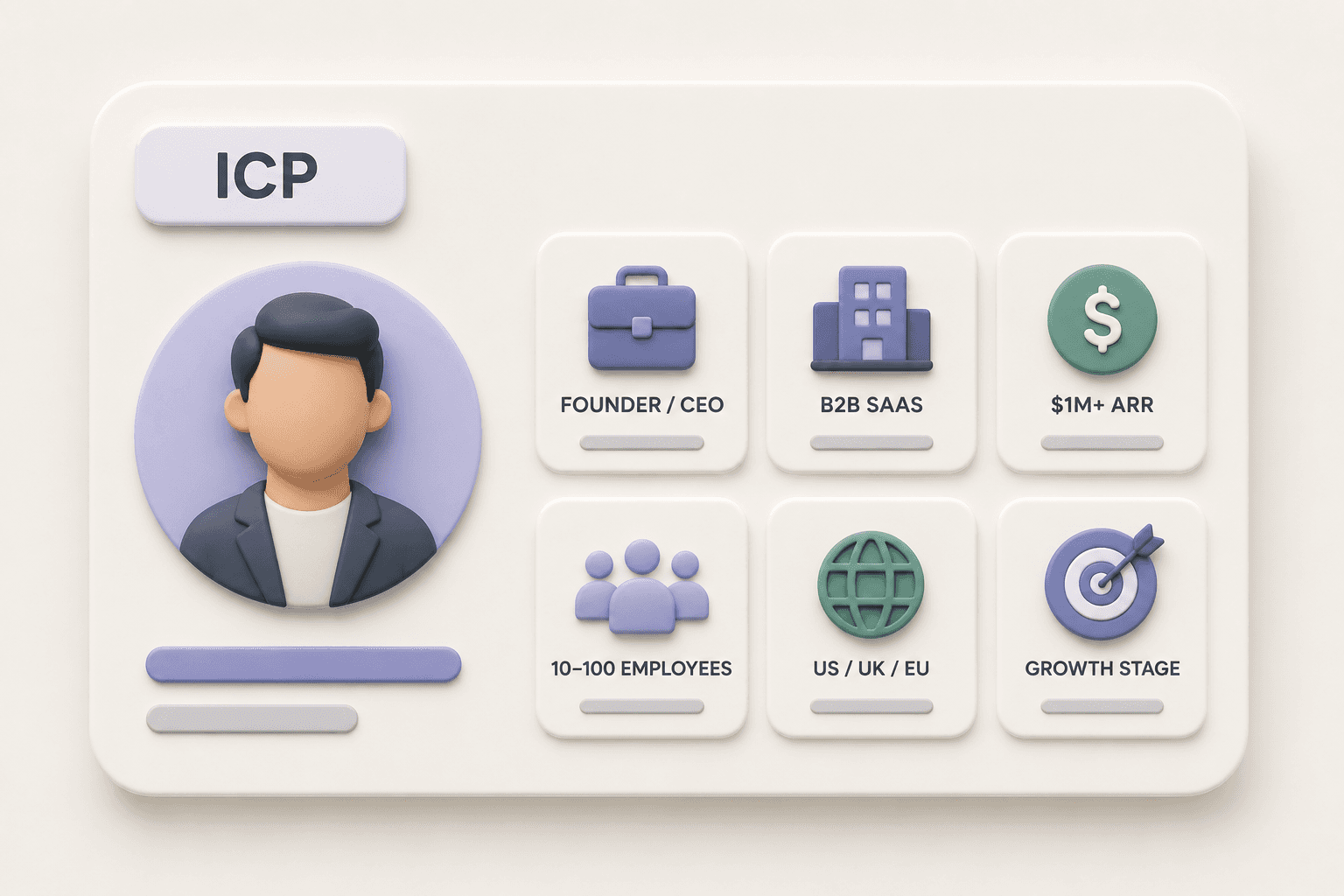
Your Ideal Customer Profile (ICP) describes the type of person or company most likely to become a successful customer. Without it, outreach quickly becomes a numbers game.
Instead of saying, "I sell to founders," narrow your audience as much as possible.
For example:
Broad audience | Well defined ICP |
|---|---|
SaaS founders | B2B SaaS founders with fewer than 20 employees who actively publish on LinkedIn |
Marketing managers | Marketing managers at Series A startups hiring their first content team |
Recruiters | Agency recruiters specializing in technical hiring for startups |
The more specific your ICP becomes, the easier it is to recognize good prospects and write messages that feel relevant.
Find prospects who are already active on LinkedIn
One of the easiest ways to improve your reply rate is to contact people who already spend time on LinkedIn.
Someone who publishes posts, comments on discussions, or regularly reacts to other people's content is far more likely to notice your message than someone who logs in once every few months.
A few places to find active prospects include:
Your existing network and mutual connections.
LinkedIn search and LinkedIn Sales Navigator.
Founder communities and startup directories.
Recent comments on industry posts.
People discussing topics related to your product.
Activity is often a stronger signal than company size or job title. An engaged founder with a small audience may be much easier to reach than a CEO with thousands of followers who rarely checks direct messages.
Research each prospect before reaching out
Personalization does not require thirty minutes of research. In most cases, two or three minutes is enough to find something worth mentioning.
Before sending a connection request, look for information such as:
A recent LinkedIn post.
A product launch or company announcement.
A podcast appearance or interview.
A shared community or mutual connection.
A topic they discuss frequently.
These details give you natural conversation starters. Instead of opening with a generic compliment, you can reference something specific that caught your attention.
The goal is not to impress the prospect with research. The goal is to demonstrate that you intentionally chose to contact them.
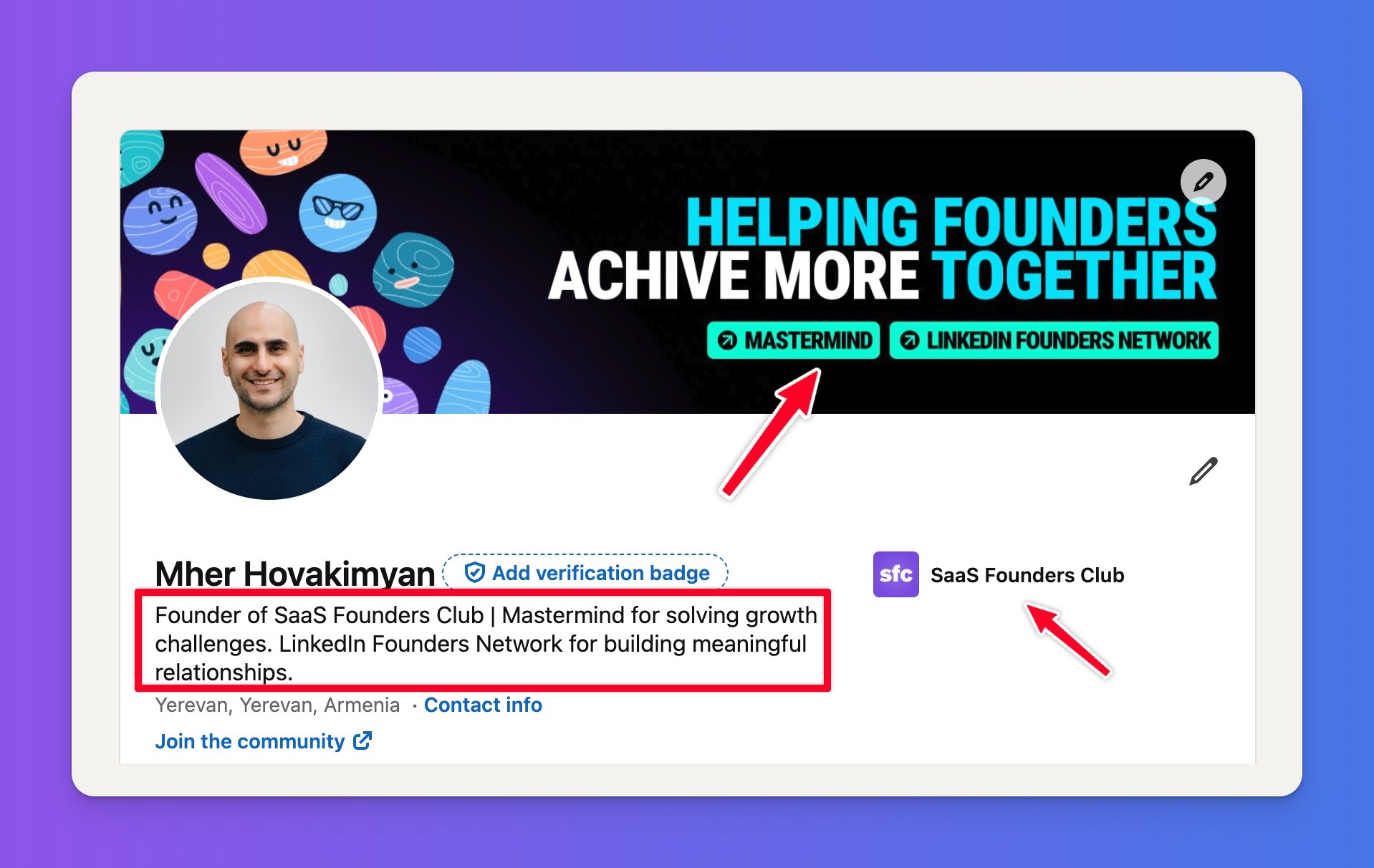
Optimize your LinkedIn profile before sending outreach
Every outreach message sends people back to your profile.
If your profile does not explain who you help, what you do, and why someone should trust you, many prospects will simply leave without replying.
Before launching an outreach campaign, review your profile from the perspective of someone who has never heard of you.
Ask yourself:
Is it immediately clear what I do?
Does my headline describe who I help?
Does my profile include social proof, customer results, or testimonials?
Is my profile photo professional and approachable?
Would I respond to someone with this profile?
Think of your profile as a landing page. Every outreach message drives visitors there, and your profile determines whether curiosity turns into trust.
Set up a simple outreach workflow
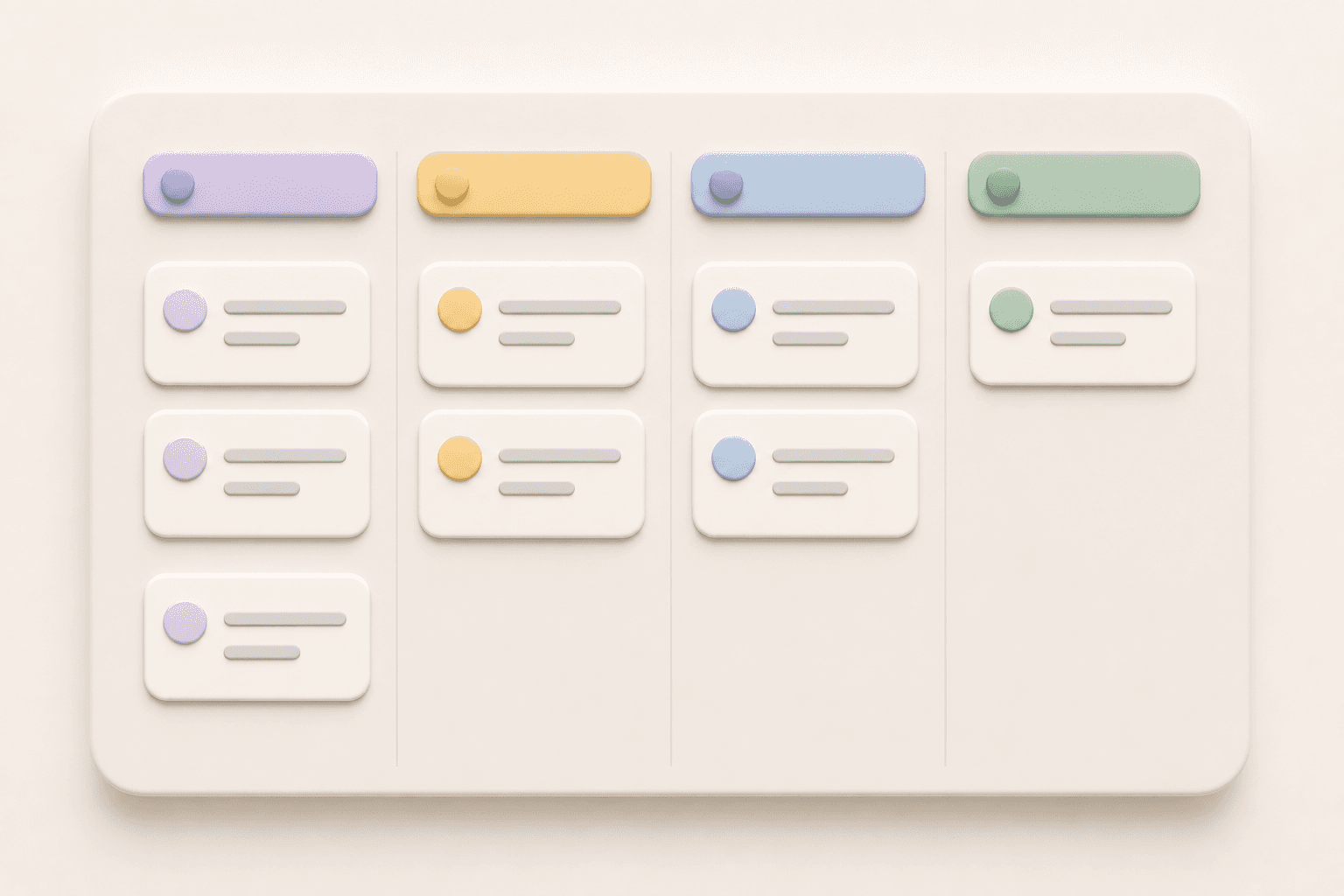
Many people try to remember every conversation in their inbox. That works for ten prospects. It becomes impossible at one hundred.
A simple tracking system helps you stay consistent without making outreach feel like a full time sales process.
At a minimum, keep track of:
Stage | Purpose |
|---|---|
Connection request sent | Avoid sending duplicates |
Connection accepted | Know when to start the conversation |
First message sent | Track response timing |
Follow up completed | Avoid forgetting prospects |
Conversation active | Identify promising opportunities |
Opportunity won or lost | Measure long term performance |
You can manage this workflow in a spreadsheet, a CRM, or any tool you already use. The specific software matters far less than consistently following the same process.
By the time you send your first message, you should already know who the prospect is, why they fit your target audience, and what makes them worth contacting. That preparation is what separates a thoughtful LinkedIn cold outreach strategy from random messaging at scale.
In the next section, we'll look at the outreach process itself, including how to write personalized messages, structure your follow ups, and keep conversations moving naturally.
The LinkedIn cold outreach process step by step
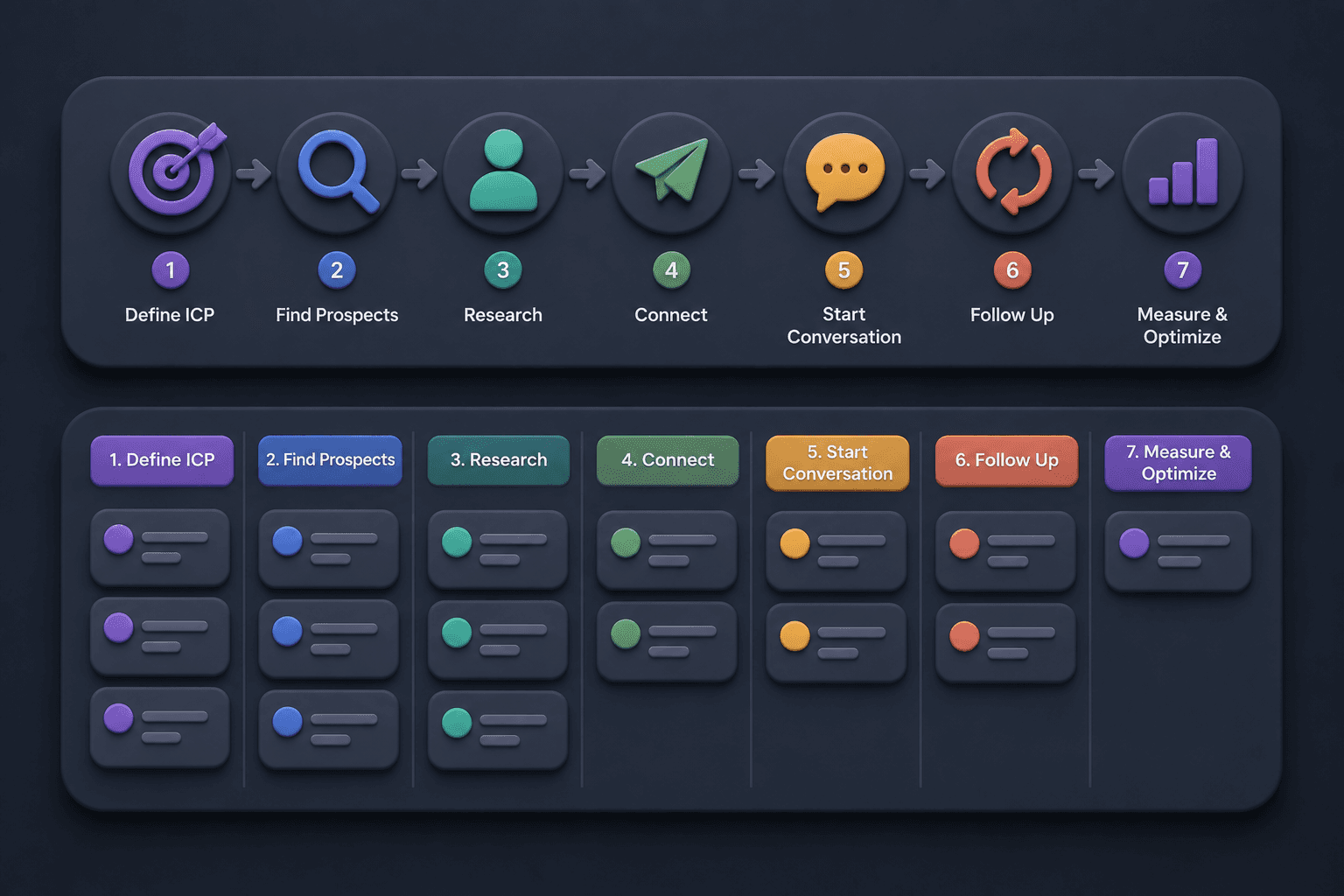
Once you've identified the right prospects and optimized your profile, the outreach process becomes much simpler. At this point, the goal is no longer to convince someone to buy from you. The goal is to start a conversation that feels relevant and worth continuing.
Send a personalized connection request
Your connection request is often your first impression. If you include a note, keep it short and make it about the other person.
Mention something specific that caught your attention, such as a recent post, a product launch, or a shared interest. Avoid introducing your product or asking for a meeting at this stage.
A simple, relevant message creates curiosity. A sales pitch usually creates resistance.
Continue the conversation naturally
Once your connection request is accepted, resist the urge to send a long introduction.
Instead, continue the conversation around the topic that led you to reach out. Ask a thoughtful question, share a relevant observation, or mention something you found genuinely interesting.
The best outreach messages feel like the beginning of a discussion, not the beginning of a sales process.
Introduce your offer when it fits the conversation
There is no universal rule for when to mention your product or service.
Sometimes it makes sense in the second message. Other times, the conversation may continue for several exchanges before the opportunity appears naturally.
Instead of forcing a transition, pay attention to buying signals. If the prospect mentions a challenge your product solves or asks a question related to your expertise, introducing your offer becomes a logical next step rather than an interruption.
That is one of the core principles of social selling. Provide value first, then explain how you can help.
Follow up thoughtfully
Many opportunities are lost because people either never follow up or send reminders that add no value.
A good follow up gives the prospect a reason to continue the conversation. That could be a useful article, a relevant case study, a new product update, or another observation related to your previous discussion.
If every follow up simply asks whether they saw your last message, there is little incentive to reply.
Quality matters more than frequency.
Measure what actually matters
One of the biggest mistakes in LinkedIn lead generation is measuring activity instead of outcomes.
Sending one hundred connection requests feels productive, but that number says very little about the quality of your outreach.
A better approach is to measure the metrics that directly reflect business results.
Metric | Why it matters |
|---|---|
Connection acceptance rate | Shows whether you're targeting the right people |
Reply rate | Measures the effectiveness of your messaging |
Positive conversation rate | Indicates how many conversations develop beyond the first reply |
Meetings booked | Measures qualified opportunities |
Customer conversion rate | Shows the real business impact of your outreach |
Tracking these metrics helps you identify where your process needs improvement.
For example, a high acceptance rate combined with a low reply rate often suggests your targeting is strong but your messaging needs work. A low acceptance rate usually points to poor targeting or a profile that does not establish enough credibility.
Frequently asked questions
Does LinkedIn cold outreach still work?
Yes. LinkedIn remains one of the most effective channels for starting B2B conversations because people expect to connect professionally. Success depends far more on relevance and personalization than on the platform itself.
How many connection requests should I send each day?
There is no universal number that guarantees success. A smaller number of highly personalized connection requests often produces better results than sending large volumes of generic messages.
Should I send a message with my connection request?
If you have something relevant to say, a short personalized note can improve your chances of starting a conversation. If not, it is usually better to wait until the connection request is accepted than to send a generic introduction.
How many follow ups should I send?
A few thoughtful follow ups are reasonable if each one adds value. Repeating the same reminder several times rarely improves results and can damage your credibility.
Should I automate LinkedIn outreach?
Automation can help with repetitive administrative tasks, but it should never replace personalization. The more your outreach feels automated, the less likely people are to engage.